




U.S. FDA approves Abecma for triple-class exposed relapsed/ refractory multiple myeloma after two prior lines of therapy
Posted on April 6, 2024
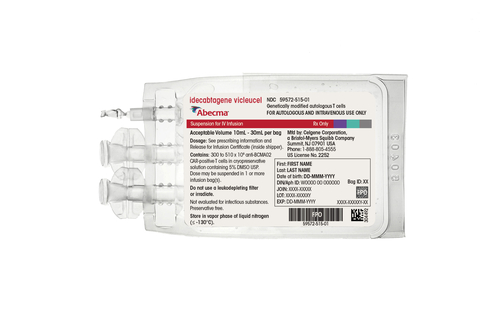
Bristol Myers Squibb and 2seventy bio have recently announced that the U.S. FDA has approved Abecma for the treatment of adult patients with relapsed or refractory multiple myeloma after two or more prior lines of therapy including an immunomodulatory agent, a proteasome inhibitor (PI), and an anti-CD38 monoclonal antibody, based on results from the KarMMa-3 trial. This approval expands Abecma’s indication, making it available in earlier lines to patients who have relapsed or become refractory after exposure to these three main classes of treatment, after two prior lines of therapy. Abecma is administered as a one-time infusion, with a new recommended dose range of 300 to 510 x 10 CAR-positive T cells.
“Abecma has demonstrated a progression-free survival benefit three times that of standard regimens in relapsed or refractory multiple myeloma, and we are now bringing the promise of cell therapy to patients earlier in their treatment journey,” said Bryan Campbell, senior vice president, Head of Commercial, Cell Therapy, Bristol Myers Squibb. “This approval underpins our commitment to addressing the unmet needs of more patients living with multiple myeloma by improving upon the current treatment paradigm, and we remain steadfast in our pursuit of innovation and advancing cell therapy research to deliver potentially transformative therapies.”
“We are extremely pleased that Abecma will be available to many more patients in the U.S.,” said Chip Baird, chief executive officer, 2seventy bio. “This approval represents another important milestone for patients, for Abecma, and for 2seventy bio as we remain committed to increasing treatment options and working to improve outcomes for patients living with multiple myeloma.”
Nonetheless, multiple myeloma remains an incurable disease characterized by periods of remission and relapse. In early lines of treatment, regimens consisting of combinations of IMiDs, PIs, and anti-CD38 monoclonal antibodies are often used to help manage the disease. Unfortunately, as many patients go on to relapse and/or become refractory to these classes of therapy, more patients are becoming triple-class exposed earlier in their treatment journey. There are limited options for these patients, and triple-class exposed relapsed and/or refractory multiple myeloma is associated with poor outcomes and a median progression-free survival of three to five months.
“The results of the KarMMa-3 study are remarkable, especially given the historic outcomes with standard regimens for these patients with relapsed or refractory disease,” said Al-Ola A. Abdallah, M.D., University of Kansas, Clinical Associate Professor, Clinical Director, Hematologic Malignancies and Cellular Therapeutics and chair of U.S. Myeloma Innovations Research Collaborative. “With this approval, these patients now have an opportunity to be treated at an earlier line of therapy with a potentially transformative therapy that offers significantly improved progression-free survival for this difficult-to-treat disease that has had no established treatment approach.”
Related Topics and Keywords
2seventy bio’s, Abecma, Bristol-Myers Squibb, Triple-Class Exposed Relapsed or Refractory Multiple Myeloma
Subscribe to our FREE newsletter and WEBINAR UPDATES
We will not sell or give your information to a third party. See our Privacy Policy















